Kids' Snacks and Cavities: What Vaughan Parents Need to Know


Introduction
If you're a parent in Vaughan, Maple, or the surrounding GTA, you're probably familiar with the endless negotiation around snacks. The challenge is that many foods marketed as healthy for kids - fruit pouches, granola bars, 100% juice, yogurt-covered raisins are among the most damaging for their teeth.
Children's enamel is thinner and more porous than adult enamel, which means cavities develop faster and more aggressively. Understanding which snacks to limit can make a meaningful difference in your child's dental health between check-ups.
The surprising offenders
Fruit juice even 100% juice
A glass of 100% orange juice contains roughly as much sugar as a glass of Coca-Cola, plus high citric acid. Children who drink juice regularly throughout the day are bathing their teeth in a sugar-acid solution for hours. This is one of the leading contributors to early childhood cavities, particularly in toddlers.
The Canadian Dental Association recommends limiting juice to occasional servings in older children and avoiding it entirely in children under 1 year. Whole fruit is always preferable, the fibre slows sugar absorption and the chewing action stimulates saliva.
Fruit pouches and squeezies
Convenient, portable, and marketed with wholesome imagery but fruit pouches are essentially concentrated fruit purée with the fibre removed. The liquid consistency means it coats all tooth surfaces immediately. Kids who snack on these frequently are at significant cavity risk.
Granola bars
Many granola bars marketed to children contain as much sugar as a cookie, plus a sticky, chewy texture that lodges between teeth. Even 'natural' versions with honey or dried fruit are high in both sugar and stickiness.
Crackers and goldfish
Starchy snacks like crackers, rice puffs, and cheese crackers break down into simple sugars almost immediately. They also get mushy and sticky, clinging to the grooves of molars where cavities most commonly form.

What to reach for instead
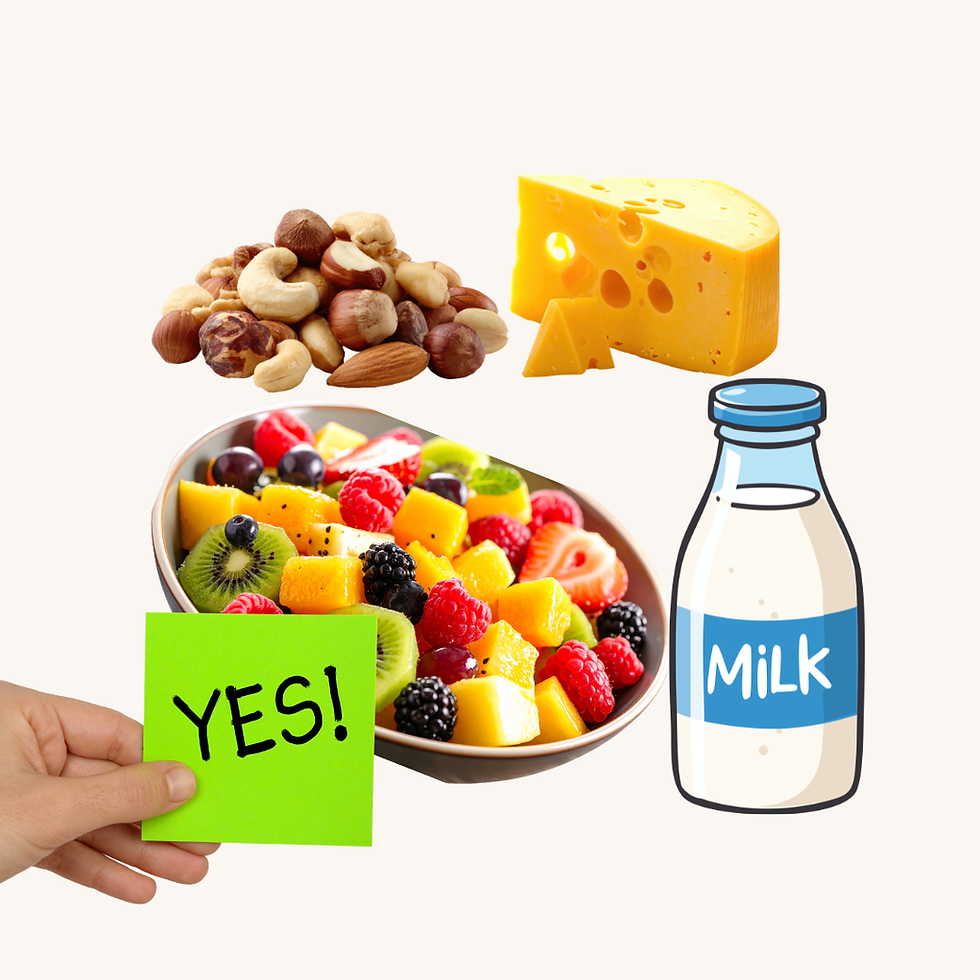
• Cheese and plain yogurt dairy proteins and calcium are directly protective
• Raw vegetables (carrots, cucumbers, celery), the chewing action stimulates saliva and cleans teeth
• Whole fresh fruit (not dried, not juiced), fibre slows sugar absorption
• Plain water or milk rather than juice or flavoured drinks between meals
• Nuts and seeds (age-appropriate), minimal sugar, high in minerals
Timing matters as much as content
Frequency is as important as what your child eats. Every time a child snacks, bacteria in their mouth produce acid for about 20–30 minutes. Three snacks a day means 60–90 minutes of acid exposure. Six small snacks throughout the day means several hours.
Limiting snacking to set times and encouraging water between snacks gives teeth recovery time and significantly reduces cavity risk even without changing the snacks themselves.
When should children start seeing a dentist?
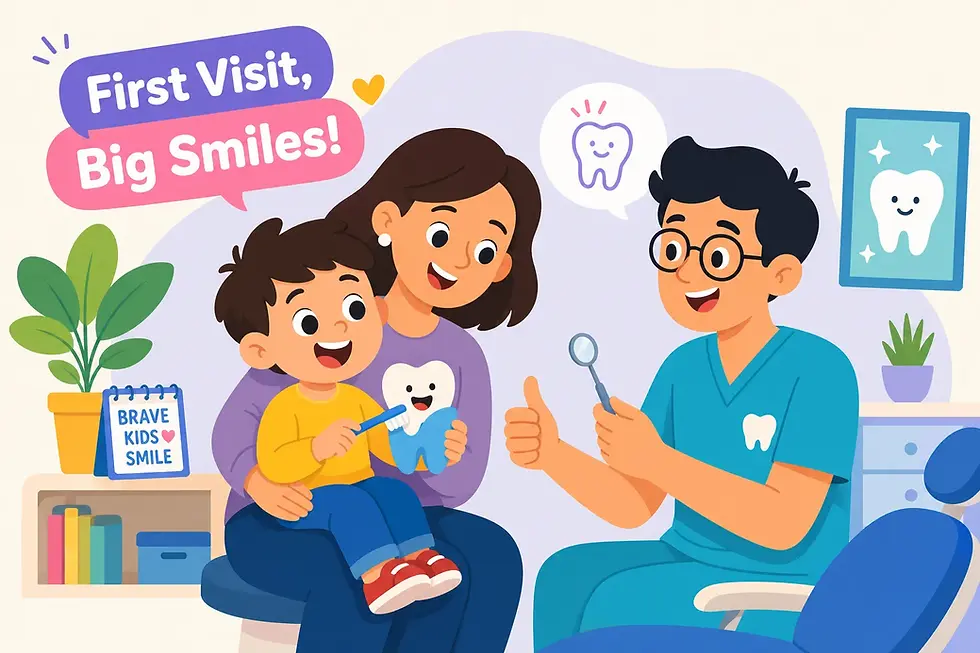
The Canadian Dental Association recommends a child's first dental visit by age 1, or within 6 months of their first tooth appearing. Early visits are low-key, they're mainly about building familiarity with the dental environment and checking developmental progress.
Starting early makes a significant difference in how comfortable children are with dental care as they grow up. VJ Dentistry welcomes families in Maple and Vaughan, and Dr. Vini is experienced in making young patients feel at ease.
VJ Dentistry is a family-friendly dental practice in Maple, ON. Dr. Vini Joseph has over 20 years of experience providing dental care to patients of all ages. Book your child's next check-up at vjdentistry.com.